- Superpower Signals
- Posts
- Fibre vs PFAS, 7k Steps, Cortisol Cocktail
Fibre vs PFAS, 7k Steps, Cortisol Cocktail
Can fibre flush out forever chemicals? Do you really need 10k steps a day? And is TikTok’s “Cortisol Cocktail” just fancy juice? Plus: why deload weeks might make you stronger.

Tash Jamieson
August 08, 2025

🧠 Superpower Signals — 8 August, 2025
Howdy 👋 This week: Could fibre be the secret to flushing out “forever chemicals”? TikTok’s latest "miracle" drink (spoiler: it’s not), and why 10,000 steps a day is overrated.
One number:

Robel Hussen Kabthymer et al, "The association of sweetened beverage intake with risk of type 2 diabetes in an Australian population: A longitudinal study", Diabetes & Metabolism (2025)
♳ More fibre reduces microplastics.
Researchers at UMass Lowell, in collaboration with Boston University, recently conducted pilot studies showing that consuming soluble fibre supplements (like psyllium or oat β‑glucan) with meals can reduce levels of PFOS and PFOA (two common “forever chemicals”) by about 8% over just four weeks [the pilots].
Our take: Oat β‑glucan is already well-established as a king fiber: multiple meta-analyses confirm that at least 3 grams per day lowers LDL cholesterol and total cholesterol by about 5–10% [the science]. It’s also cheap and delicious (it’s the main component of Oat Groats, Steel-Cut Oats, and Oat Bran), so add these for an amazing cholesterol + PFAS reducing combo. We recommend 35-40 grams of total fiber per day from a variety of sources. Here's a list of my favorites [the list].
🥾 You don’t actually need 10,000 steps a day.
The biggest walking study ever, tracking over 120,000 people worldwide, shatters the "10,000-step" myth: just 7,000 daily steps deliver almost all the health perks. Moving from 2,000 to 7,000 steps is transformative; going beyond 7,000 offers minimal extra benefit [the study].
Our take: This finding also makes me think about the importance of how frequently you move, not just how much. Prolonged sitting (>8 hrs/day) is linked to a 30% higher risk of early death, even if you exercise [the research]. So maybe try breaking those 7,000 steps up throughout your day.
🍹Cortisol Cocktail: Miracle stress reducer?
The "Cortisol Cocktail," trending on TikTok, promises stress relief, better sleep, and a calmer mind. But does it deliver? Main Ingredients are: Magnesium powder, citrus juice (lemon or orange), coconut water, and optional salt or sparkling water [TikTok recipe].
Our take: Like its viral predecessors, TikTok’s latest mocktail is rooted in... placebo. It taps into stress-supporting ingredients like magnesium, vitamin C, and electrolytes, but in doses too small to really move the needle. If it helps you unwind, go for it! But if you’re after real impact on cortisol, magnesium glycinate is where the science points [the research].
“Our take” is a quick, off-the-cuff perspective on the health trends catching our eye this week. It might be a personal anecdote, a gut-check, or a philosophical lens. It’s not medical advice, just our two cents. Read with nuance.
Superpowered by you: Deload weeks.
Want to lift heavier? Try… not lifting?
Ajay P (Superpower’s Head of Growth) swears by deload weeks- a structured reduction in training intensity, volume, or frequency. Far from being lazy, this approach is essential for long-term gains in powerlifting.
Strategically incorporating a deload every 4–8 weeks (depending on your training intensity, volume, and personal recovery) helps manage fatigue, resets your muscles, and sets the stage for stronger lifts.
A 2024 survey of 246 competitive strength athletes found that most used deload weeks to:
Manage fatigue (92.3%)
Prepare for new training phases (64.6%)
Improve overall performance (59.8%) [the survey]
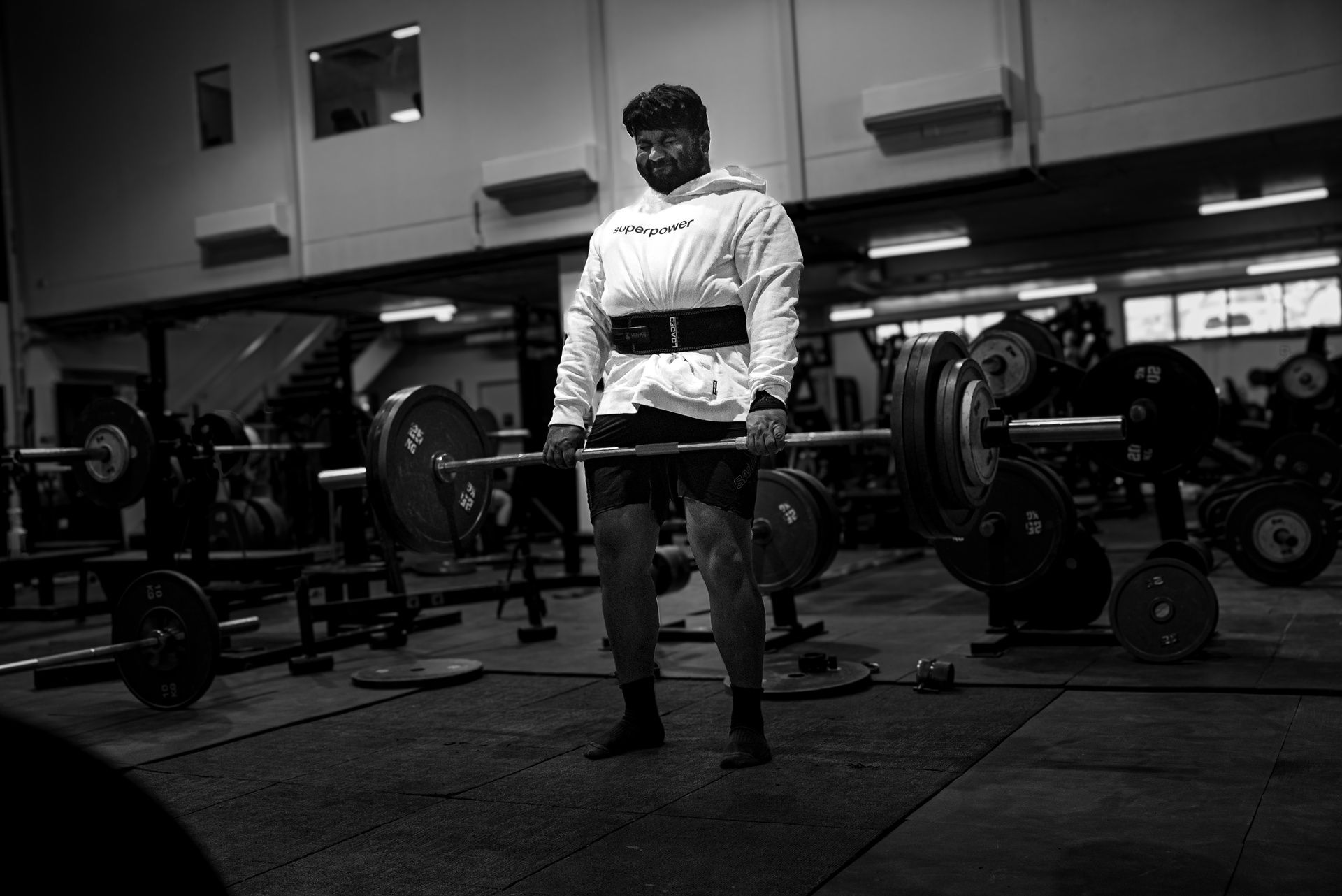
For anyone trying to squint at those plates, that’s a total of 200kg (441lbs). Beast.
If you’re a strength or physique athlete, do you incorporate deload weeks into your training? Or do you think (as one study actually suggests) that it doesn’t really do much [the study]?
See you next week.

Give Superpower Signals a read and hit reply to let me know what you think. Your feedback shapes where we go next.
DISCLAIMER: The information provided in this newsletter is for educational purposes only and is not a substitute for professional medical advice, diagnosis, or treatment. Always consult your healthcare provider before making any changes to your health or wellness routine.