- Superpower Signals
- Posts
- Moldy Machines, Coffee Habits, & Liver Biomarkers
Moldy Machines, Coffee Habits, & Liver Biomarkers
Our dishwasher faces judgment day, coffee drinkers have 20% lower GGT, and Ozempic helps with alcohol addiction.

Tash Jamieson
November 07, 2025

Superpower Signals — 07 November, 2025
Hi readers 🤓 So… our office dishwasher might be disgusting. Is it because someone didn’t rinse the food off their plate first? Probably. Is it because dishwashers make perfect little homes for black mold? Absolutely.
While we let that mystery simmer, we’re diving into a much cleaner topic: γ-Glutamyl Transferase (aka “GGT,” which I just learned is pronounced gamma, not why).
This week:
3 new health and science discoveries
Superpowered by You: Dishwashers
The Lab Note: γ-Glutamyl Transferase
One number:
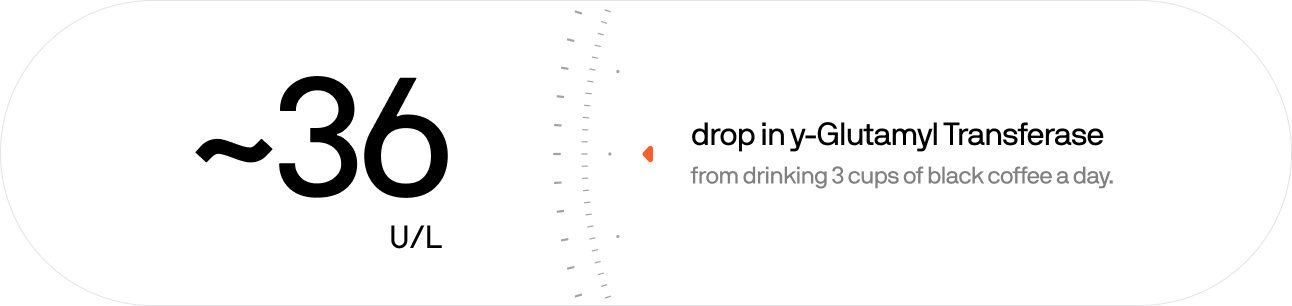
In a study of 12,000 Japanese adults, men who drank three or more cups of coffee a day had roughly 20% lower GGT levels than non-coffee drinkers — especially among heavy alcohol consumers, suggesting coffee may help curb alcohol-related liver enzyme spikes [PMID: 9698132].
Latest news:
🍻 Ozempic may also curb alcohol cravings
A small trial found that people with alcohol use disorder who took low-dose Ozempic drank less, craved less, and had fewer binges… without even trying to quit [the trial].
Our take: Addiction’s often framed as a willpower problem, but that couldn’t be further from my reality. I’ll be six years sober this New Year’s Day (yay!), and while I own my own actions, imo part of this was probably biology. Genetic studies have now linked over 220 regions to addiction [the findings], including genes like DAT1, SLC6A4, and DRD2… all of which I happen to carry. Some of us are literally wired to crave more, or feel less. Rather than “just stop”, solutions like this work with the biology that makes addiction hard in the first place.
🦠 Gut bacteria make serotonin and may drive IBS
A Cell Reports study found that certain gut microbes make serotonin, and that people with IBS lack them. Restoring these strains could rebalance the gut and calm symptoms naturally [the study].
Our take: Most people think serotonin is mainly in our brains, but 95% of it is actually produced in the gut [the science]. Serotonin plays a critical role in regulating digestion and nerve function in the enteric nervous system - the "brain" of our gut. Missing microbes in your gut that produce serotonin can throw everything off. If we can grow or reintroduce those bacteria we might be able to fix conditions like IBS at the source.
💊 Old drugs, new tricks — the rise of repurposing
On a new Huberman Lab episode, Dr. David Fajgenbaum dives into how existing drugs are being redeployed to treat entirely new conditions — from cancer to long COVID [the episode].
Our take: Some of the most exciting “new” therapies aren’t new at all. The real breakout is often in drugs rediscovered and repurposed. Take the peptide fold: GLP-1s started in diabetes, now they’re tackling obesity and addiction. Thymosin alpha-1 began as an immune booster, now it’s studied in cancer and viral illness. Even aspirin (began as a pain-killer) and Viagra (origionaly for heart issues) are repurposed hits. Repurposing is smart health science: faster, safer, and often cheaper than starting from scratch. With research budgets shrinking [the predicted cuts], we need to lean into these cost-effective pathways to get care to people who need it the most.
“Our take” is a quick, off-the-cuff perspective on the health trends catching our eye this week. It might be a personal anecdote, a gut-check, or a philosophical lens. It’s not medical advice, just our two cents. Read with nuance. Disagree with our take? Don’t unsubscribe, hit reply. We read everything!
Superpowered by You: Dishwashers.
Dishwashers are supposed to make things cleaner, right?
Turns out, they might be doing the opposite.
A 2019 study found that every single dishwasher tested had bacterial and fungal buildup hiding in the rubber door seal, including Exophiala dermatitidis, a black yeast linked to respiratory issues and infections in people with weakened immunity [the study].
Indoor mold exposure has been shown to raise asthma risk by up to 50% and aggravate allergies, fatigue, and even mood symptoms [the science].
So, how can you keep your dishwasher healthy? Non-Toxic Dad breaks it down in three rules [his TikTok]:
Rule #1: Leave your dishwasher door open when not in use to reduce humidity, where mold thrives.
Rule #2: Clean your dishwasher monthly with a baking soda rinse and running on it’s hottest setting.
Rule #3: Wipe door seals and gasket thoroughly (mould loves the rubber lip)

…and Manoj’s Rule #4: Stack your dishes parallel!
Yesterday the Lightwork Home Health team started a full health audit of Superpower HQ.
We’ll test our own maybe-moldy dishwasher later, but they’re measuring what really matter: air quality, particulates, humidity, EMFs and more.
We always joke (but kind of mean it) that we have the “World’s Healthiest HQ.” Soon we’ll find out — and reveal the results live on our upcoming webinar.
Date TBC (aiming for early December). Drop your email below and I’ll ping you when it’s locked.
The lab note:

Our optimal range: 0–20 U/L (units per liter)
What it tests for: GGT is a liver enzyme that helps recycle glutathione, the body’s master antioxidant. It’s primarily found in liver and bile duct cells, and small amounts enter the bloodstream when these cells experience stress or increased turnover.
What it tells you about your health: Even mild increases in GGT within the normal range can signal oxidative or toxic stress - from alcohol, drugs, xenobiotics, or environmental exposures. Lower GGT reflects efficient antioxidant recycling, metabolic resilience, and reduced long-term risk for liver and cardiovascular disease.
From our slightly suspicious dishwasher to yours,

Give Superpower Signals a read and hit reply to let me know what you think. Your feedback shapes where we go next.
DISCLAIMER: The information provided in this newsletter is for educational purposes only and is not a substitute for professional medical advice, diagnosis, or treatment. Always consult your healthcare provider before making any changes to your health or wellness routine.