- Superpower Signals
- Posts
- Period Blood, Chocolate, Time Changes & Sleep Apnea
Period Blood, Chocolate, Time Changes & Sleep Apnea
Happy Halloween! This week’s science hits sweet and smart: from period blood diagnostics to sleep apnea in youth, clock change health effects, and chocolate’s anti-inflammatory edge.

Tash Jamieson
October 31, 2025

Superpower Signals — 31 October, 2025
Boo! 👻 Halloween’s here — and while the candy aisles are chaos, the real fright is what daylight saving does to your health.
For our North American readers, clocks fall back this Sunday night (Nov 2): an extra hour of sleep for some, a mild circadian nightmare for others. Our friends in the UK and Australia have just been through the wringer, so… body clocks, beware!
This week:
Three science discoveries (including the diagnostic frontier of period blood)
Why your Halloween chocolate might actually be a health hack
How sugar and insulin impact more than just your post-trick-or-treat crash
One number:
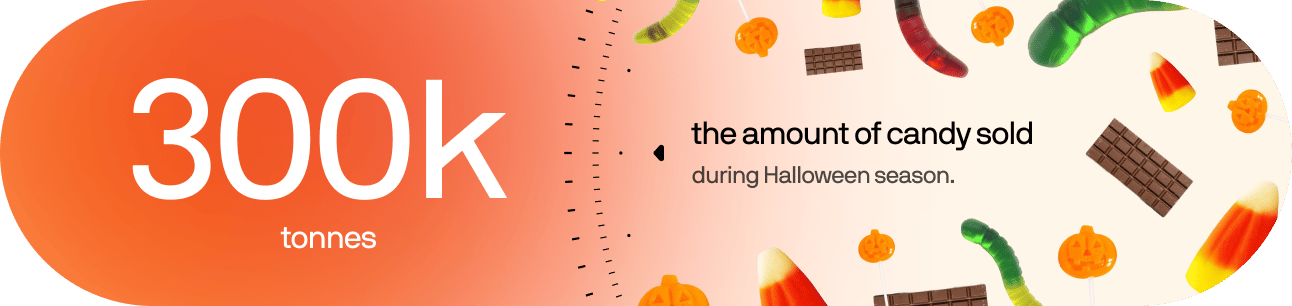
If you took all the candy that's sold during Halloween week and turned it into a giant ball it would be as large as six Titanics [Vox].
Latest news:
🩸 Period blood becomes a new diagnostic frontier
Femtech startups are developing tests that use menstrual blood to detect conditions from endometriosis to diabetes. Period fluid (once dismissed as waste) contains uterine cells and molecular signals that standard blood tests can’t capture [the article].
Our take: I love this one. The components of menstrual blood carry incredible information about what’s happening inside the body. Studies already link it to detecting hormonal imbalances, cervical cancer, endometriosis, diabetes, and more [the study]. It reminds me of how we used to discard the placenta, not realizing it’s rich in multipotent stem cells that can save lives [more]. The human body is astonishing; even what we think of as “waste” is really wisdom about how we function and heal.
😴 Sleep apnea isn’t just for dads who snore
Doctors are diagnosing obstructive sleep apnea in more young, fit adults, not just the older or overweight. Nearly 30 million Americans may have the condition, yet 80% remain undiagnosed [the discovery].
Our take: I used to think everyone woke up tired even after eight hours. I was in my late 30s, fit, not overweight (not the “sleep apnea type”) when I tried a CPAP on a friends hunch. Total game changer. My energy, focus, even mood flipped. Check biomarkers like hs-CRP, insulin, and testosterone, all can flag sleep-related stress. But if you can, get a sleep study. It’s worth it.
⏰ Ditch the clock change?
A Stanford model found that moving permanently to Standard Time could prevent 2.6M obesity cases and 300K strokes [the study].
Our take: Daylight Saving Time wasn’t designed for human health. It was a wartime energy saving hack first rolled out in 1916 [the history]. A century later, we’re still paying for it with circadian jet lag. In his TED talk, Matthew Walker notes that when we "spring forward" and lose an hour of sleep, there's a 24% increase in heart attacks the following day!! And when we "fall back" and gain an hour, there's a 21% DECREASE in heart attacks! I think the outcomes speak for themselves [the TED Talk].
“Our take” is a quick, off-the-cuff perspective on the health trends catching our eye this week. It might be a personal anecdote, a gut-check, or a philosophical lens. It’s not medical advice, just our two cents. Read with nuance. Disagree with our take? Don’t unsubscribe, hit reply. We read everything!
Superpowered by You: Chocolate.
Every Halloween, Americans buy around 90 million pounds of chocolate.
And honestly, good choice.
Because chocolate, specifically dark chocolate, is loaded with flavanols - the plant compounds that help calm inflammation and protect your heart [the research].
A new trial showed this effect on what researchers are calling inflammaging (inflammation + aging, get it??) [the research].
Two groups of older participants took either cocoa extract (with 500 mg of flavanols, including 80 mg of (-)-epicatechin) or a placebo daily for two years.
Here’s what happened:
The placebo group’s hs-CRP (a key inflammation marker) climbed 5.5% per year, while cocoa-takers saw a small drop.
Among those with higher inflammation to start, hs-CRP fell nearly 38% per year.

Chocolate Frogs for Heart Health 🐸🍫 — sounds like Hogwarts wellness marketing, but honestly, I’d fund it.
Those small drops in hs-CRP matter: lower levels track with lower cardiovascular risk across populations, even after adjusting for risk factors [observational meta-analyses].
So this Halloween, when you sneak a square (or three) of dark chocolate, you might actually be getting a small, but delicious, edge on ‘inflammaging’.
Superpower members have the best life hacks and health stacks. Got one? Reply and we might feature it in the newsletter...or even surprise you with a Hoodie.
The lab note:

Our optimal range: 2.6–5 μIU/mL (micro–international units per milliliter)
What it tests for: Amount of insulin circulating in your blood to help your cells absorb and store glucose for energy.
What it tells you about your health: Elevated insulin can signal early insulin resistance, often years before blood sugar rises. Keeping it in range supports stable energy, lower inflammation, and long-term metabolic health.
Toodles — off to fight inflammaging.

Give Superpower Signals a read and hit reply to let me know what you think. Your feedback shapes where we go next.
DISCLAIMER: The information provided in this newsletter is for educational purposes only and is not a substitute for professional medical advice, diagnosis, or treatment. Always consult your healthcare provider before making any changes to your health or wellness routine.